- Frequently Asked Questions -
About Office Chair Massage
What is Office Chair Massage?
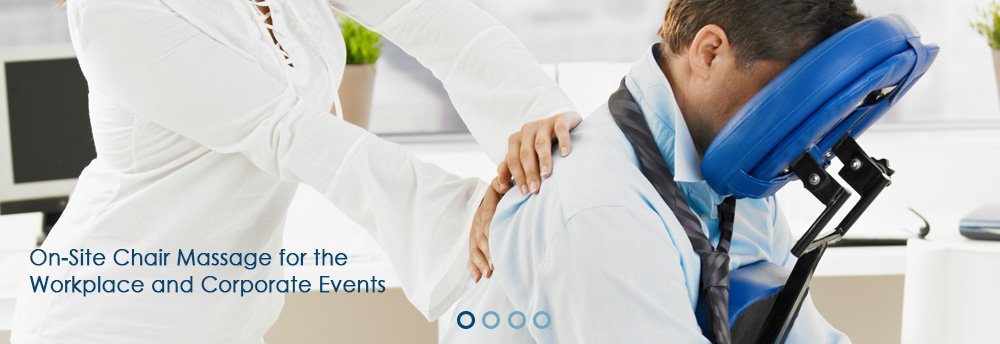
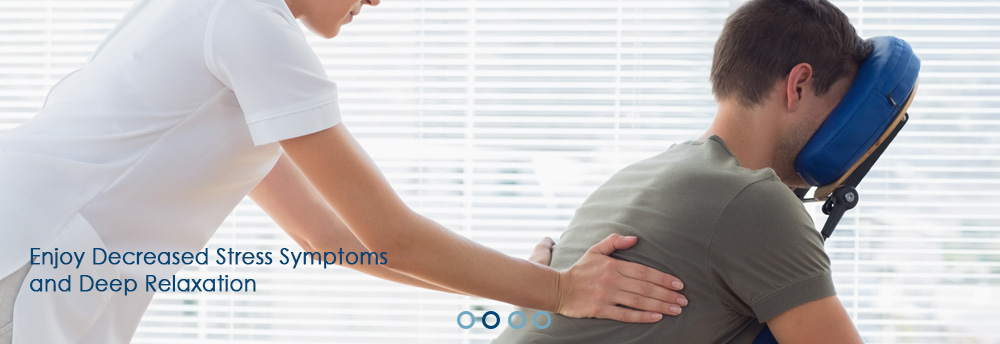
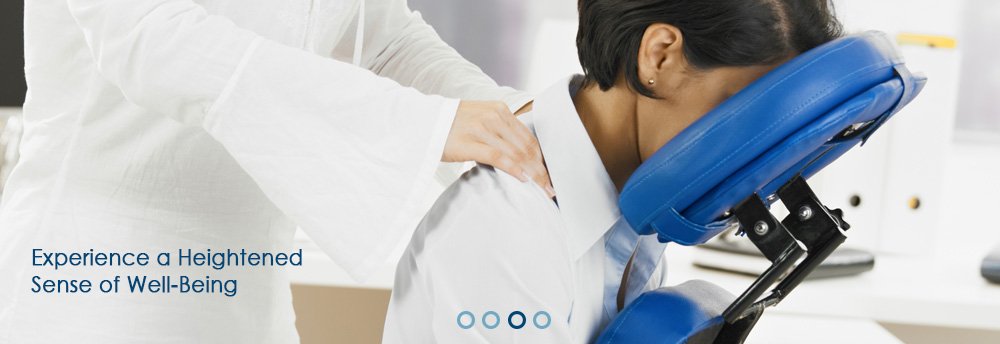
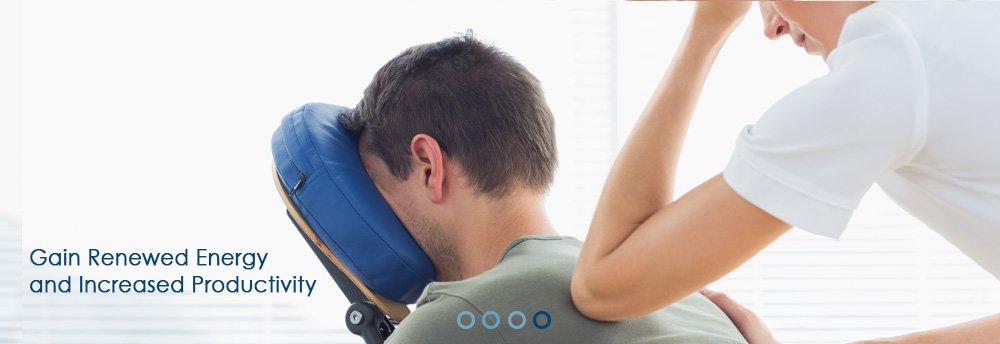
Office chair massage is performed by a certified massage practitioner while the client (employee) sits in an ergonomic chair. This chair is specifically designed to reduce pressure on the spinal column and hip joints. The client leans forward and rests his/her torso and head comfortably on the support cushions.
The practitioner uses a combination of Swedish and Shiatsu-type massage techniques to relieve tension in the muscle groups of the neck, shoulders, back, arms and hands.
Office chair massage sessions are usually 15 or 20 minutes in duration but can be anywhere from 5 to 30 minutes (or longer) depending on determining factors such as: number of participants, venue/occasion, time, or budget.
Do I have to get undressed?
No! This is one of the great benefits of chair massage. You remain fully clothed and no oils are used. Total privacy is not necessary and it is perfectly acceptable to observe or receive chair massage in public.
If you wear a suit and tie, you may want to remove your jacket, loosen your tie and undo the top button of your shirt.
Is Office Chair Massage covered by my Extended Health Care Plan?
Generally, chair massage (performed by a certified chair massage practitioner as opposed to a registered massage therapist) is not covered by employee benefit plans. Office chair massage, arranged by Workplace Wellness Massage, is not intended to replace treatment for injuries or medical conditions but is designed as an effective employee stress management method.
What about liability?
All practitioners who represent Workplace Wellness Massage are certified and carry a minimum $2 million professional liability insurance.
How much does it cost?
Workplace Wellness Massage prices for office chair massage are among the lowest in the industry and all our work is fully guaranteed. Our fees are usually paid by the client-company through their wellness fund or event budget.
There are no hidden fees and the only additional charge may be a travel fee for remote locations or a parking fee. Please refer to the Chair Massage Prices page for more detailed information.
How will my company benefit from this service?
Statistics show:
- A return on investment of $3.40 for every dollar invested in wellness initiatives as shown by reduced turnover, increased productivity and decreased insurance claims
- Health Canada
- Regular 15-minute chair massage sessions result in decreased job stress, better performance, and increased speed and accuracy on math computations
- International Journal of Neuroscience 86, 197-205
- Hospital staff members who were massaged regularly reported increased vigor and a significant decrease in anxiety, depression and fatigue
- Alternative Therapies in Health and Medicine
Will I feel sleepy/drowsy after the chair massage?
You may relax to a point where you actually fall asleep for a few minutes during the massage. This is just a little cat-nap (not a deep-sleep phase) and beneficial because it gives your whole system the opportunity to re-set itself. Stand up slowly after the massage and do some easy stretching to overcome any drowsiness. It is also recommended to drink water after massage in order to re-hydrate and help eliminate toxins. Sleepiness will subside quickly and be replaced by increased energy and alertness.
When should I NOT get a chair massage?
Generally, there are very few conditions that are aggravated by chair massage. The practitioner will ask you a few health-related questions before the massage at which point you can inform him/her of any acute or chronic conditions such as fever, hypertension, herniated discs etc. Sometimes it is better to pass the opportunity for an office chair massage but in cases such as a fractured ankle or a cut on the hand, the practitioner can usually adjust the chair or work around the affected area.
How do I book an appointment?
Call or e-mail us with the following information:
- company name and address
- contact person
- date and location for massage-day
- approximate number of employees/attendees
- preferred duration of each massage session
How much space is needed?
A 5'x6' area is sufficient per chair/practitioner. A board room or unused office works well, but we can set up just about anywhere.
Are gratuities or tips expected?
Gratuities are not expected or necessary; however, feel free to tip if you received outstanding service.

Service available in Canada only.