What is Chair Massage?
(Also referred to as Seated Massage)
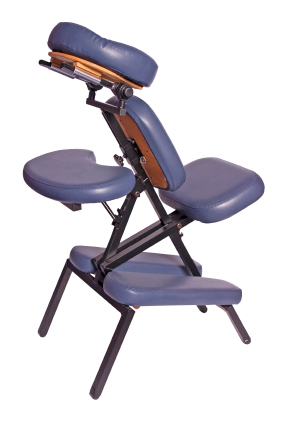
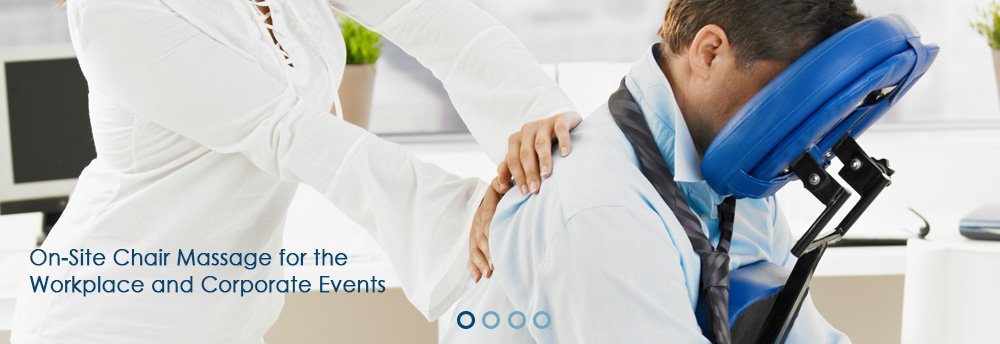
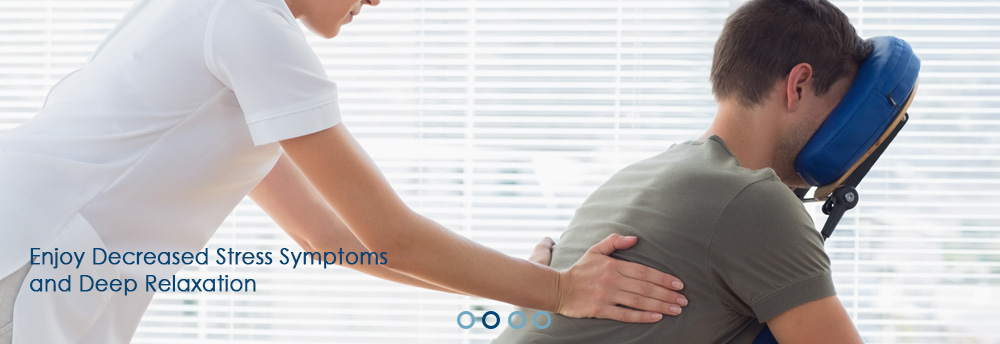
The term "Chair Massage" describes the type of massage that is performed while the client sits fully clothed in a special chair.
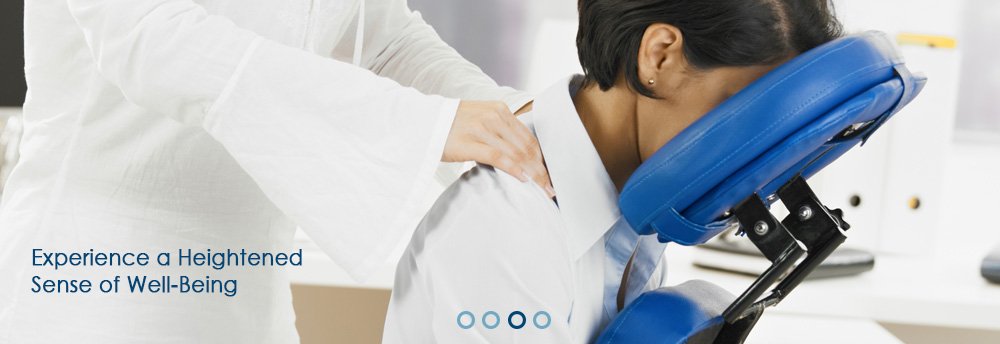
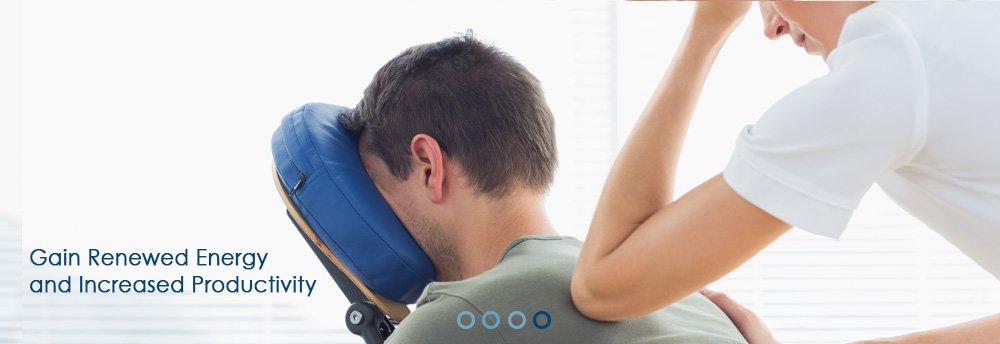
This unique massage chair is ergonomically designed and offers full support of the head (face forward), arms, torso and legs. Workplace Wellness Massage staff are certified and insured practitioners who use a combination of deep tissue and Swedish massage techniques, usually on the muscle groups in the neck, shoulders, back, arms and hands.
The massage chair folds up easily and is completely portable. It can be set up just about anywhere. A conference room, spare office or quiet room are perfect but if need be, the massage chair can be set up right in front of a desk. No more than a 5x6 foot area is required. This, and the fact that the client remains fully dressed, makes chair massage very convenient and also eliminates the need for total privacy.
Staying dressed and publicly visible has had a tremendous impact on how people perceive massage. With seated massage there is no mystery or fear of the unknown. After all, how can you relax if you are anxious about the experience. Now everyone can enjoy the many benefits of massage and it is perfectly acceptable to watch someone, or be seen, getting a chair massage.
A Brief History of... Chair Massage
And brief it certainly is. In the early 1980's, which isn't so long ago, David Palmer (founder of the TouchPro Institute) thought of ways to make massage more acceptable to the general population. Mr. Palmer is a practitioner and teacher of chair massage as well as traditional Japanese massage, or Amma, which is a combination of deep tissue, acupressure, stretching and percussion techniques.
Having people leave their clothes on overcame the first obstacle. Then, in 1986 he invented the portable massage chair in order to make it even more convenient. With the mobility of the chair it became possible to bring massage to the people, anywhere, anytime; and the term On Site Chair Massage was born.
Qualifications
Chair massage practitioners are professionally trained, certified and insured. They are educated in basic musculoskeletal anatomy/physiology and massage techniques, such as Swedish, compression, deep tissue and percussion, which are adapted for use with a professional massage chair. Through proper use and combination of posture, bodyweight, and techniques, practitioners can relief muscle tension in a very short period of time.
Chair massage performed by Certified Practitioners (as opposed to Massage Therapists) is not intended to replace treatment for injuries or medical conditions but is designed as an effective stress management method by triggering the Relaxation Response. In this calm state the body and mind are given an opportunity to re-charge and let go of stress symptoms.
Professional training and certification in chair massage is provided by a number of accredited massage schools in the USA and Canada.
"The pressure of the hands causes the springs of life to flow"
- Tokujiro Namikoshi
The Actual Massage
Before the massage begins the practitioner will ask a few health-related questions. This is necessary to make sure there are no contraindications. Even though there aren't many conditions that are aggravated by seated massage, sometimes it is better not to have a massage, e.g., fever or flu. In case of localized pain such as a sprained wrist or a cut on the hand, the practitioner can usually work around those areas.
The practitioner then demonstrates how to get into the massage chair and it will be adjusted until the client is perfectly comfortable.
Most often the areas worked on are the muscle groups in the neck, shoulders, back, arms and hands. These are generally the areas where most of the tension builds up. However, it is also possible for the practitioner to work on the scalp, legs and feet.
A chair massage should never hurt and the practitioner will adjust pressure to the client's preferred level. The massage typically lasts anywhere from 5 to 30 minutes (depending on the agreed upon arrangements) but can be customized to any length of time.
Some of the Benefits of Chair Massage
- Increases circulation and the flow of nutrients throughout the system
- Reduces muscular tension that can lead to chronic pain
- Stimulates lymphatic tissues thereby flushing out toxins
- Helps to relieve muscle stiffness and stress-induced tension
- Releases endorphins (feel-good hormone) into the blood stream
- Reduces fatigue, anxiety and depression
- Helps provide better quality of sleep
Chair Massage is most commonly used for corporate stress management (please visit our Workplace Massage page) but the applications are limitless and range over a wide variety of professions, locations and events.

Service available in Canada only.